
In this article

GemStore team — written by the people who list and pack every stone.
Reviewed on
Feroza (turquoise) is graded on things you can see with the naked eye, which makes it one of the easiest gems for a buyer to judge, once you know what each feature means. It is also one of the most imitated stones in the bazaar, so quality and authenticity questions go hand in hand.
Colour: the sky blue ideal
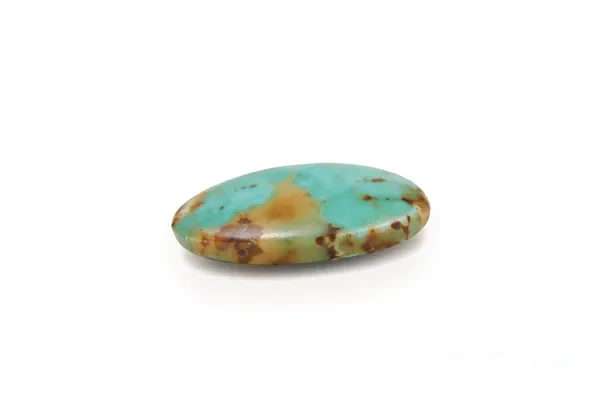
The classic favourite in Pakistan and Iran is an even, saturated "sky" or "robin's egg" blue, the colour associated with Nishapur feroza from Iran. Greener blues and pale or chalky tones usually rank lower, though some buyers prefer them. What matters most is that the colour is even across the stone and has depth rather than looking flat or powdery.
Matrix: the veins in the stone
Many turquoises carry brown, black or golden veins of the host rock, called matrix. Fine, even "spiderweb" matrix can be attractive and valuable in its own right. In the traditional South Asian market, however, a clean blue stone with little or no matrix is usually preferred for rings.
Hardness and porosity
Natural turquoise is 5 to 6 on the Mohs scale and porous. Denser, harder material takes a better polish, keeps its colour longer and is worth more. Soft, chalky turquoise absorbs skin oils and can turn greenish over the years.
Stabilised, treated or natural?
Because so much turquoise is soft, a great deal of it is stabilised, meaning impregnated with resin to harden it and fix its colour. Stabilised turquoise is still real turquoise and is a sensible choice for everyday jewellery, but untreated, naturally hard stones command more. Dyed turquoise, where colour has been added, is a further step down. Ask the seller which you are buying; we disclose treatments where known.
Imitations to recognise
- Dyed howlite or magnesite: white stone dyed blue. The dye concentrates in the veins and cracks, and a scratch on the back may reveal white underneath.
- Reconstituted turquoise: powder bonded with resin, often with a too-regular look.
- Plastic: very light, warm, and can be dented with a fingernail.
Caring for it
Because feroza is soft and porous, keep it away from perfume, oils, soap residue and chemicals, and never use an ultrasonic cleaner. Wipe with a dry or slightly damp cloth. It is better suited to pendants and earrings than to a ring worn constantly, or to a ring taken off before washing and cooking.
Feroza as a travelling stone
In South Asian practice feroza is linked to Jupiter (Brihaspati) and has long been worn for protection while travelling. These are traditional beliefs, not guaranteed results; our rashi guide sets out the pairings.
Shop feroza
Each stone in our feroza collection is inspected and photographed individually, so you see the real colour and matrix. You might also compare kunzite or red agate. Urdu names are on our names page, and we deliver with Cash on Delivery to Lahore, Karachi and every other city.
References











