
In this article

GemStore team — written by the people who list and pack every stone.
Reviewed on
Traditional belief vs gemmology: anything on this page about luck, protection, planets, healing or religious tradition describes traditional and cultural beliefs — not proven effects, religious rulings or medical advice. A stone's identity, hardness, treatment and origin are gemmology, which a lab can test; the references at the end of the page cover that side.
Short answer: January is garnet, February amethyst, March aquamarine, April diamond, May emerald, June pearl or moonstone (and alexandrite), July ruby, August peridot (and spinel), September blue sapphire, October opal or tourmaline, November topaz or citrine, and December turquoise, tanzanite or zircon. Find your month in the table below, then read the notes on each stone for what it is, how durable it is and what to look for when you buy.
In Pakistan two systems are used side by side: this Western month list, which is about tradition and personal meaning, and the Vedic rashi system, which links a stone to your moon sign and its ruling planet. We explain the difference further down.
Birthstone table with local names
| Month | Birthstone | Urdu / local name | Colour | Traditionally associated with |
|---|---|---|---|---|
| January | Garnet | Yaqoot-e-Rumani | Deep red | Protection, energy, safe journeys |
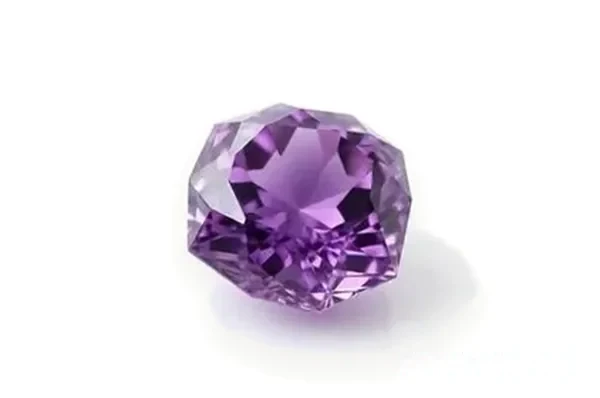
| February | Amethyst | Jamunia | Purple | Calm, clear thinking, sobriety |
| March | Aquamarine | Beruj | Sea blue | Courage, serenity |
| April | Diamond / white sapphire | Heera / safed pukhraj | Colourless | Strength, purity, lasting love |
| May | Emerald | Zamurd / panna | Green | Renewal, wisdom, love |
| June | Pearl / moonstone | Moti / chandrakant | White, with sheen | Purity, intuition, balance |
| July | Ruby | Yaqoot | Red | Passion, vitality, leadership |
| August | Peridot | Zabarjad | Olive to lime green | Well-being, good fortune |
| September | Blue sapphire | Neelam | Blue | Wisdom, loyalty, discipline |
| October | Opal / tourmaline | Opal / turmali | Play-of-colour / pink | Creativity, hope |
| November | Topaz / citrine | Sunehla / sunela | Golden yellow | Warmth, abundance, friendship |
| December | Turquoise / tanzanite | Feroza / tanzanite | Sky blue / violet-blue | Protection, good luck |
Names vary from bazaar to bazaar; our Urdu and English gemstone names page lists the common variations.
Quick notes on each month's stone
January: garnet
The name is linked to the Latin word for pomegranate, after the seed-like red crystals. Travellers once carried it as a protective charm. The classic birthstone reds are almandine and pyrope; rhodolite (raspberry pink) and green tsavorite are popular modern varieties. At around 7–7.5 on the Mohs scale it is durable enough for rings, and it is an affordable first precious gift for a January baby.
February: amethyst
Purple quartz. Its Greek name is usually explained as "not drunk", and it has long been a symbol of a clear, steady mind. Large deposits in South America made it widely affordable. Choose a deep, even purple, ideally with reddish flashes; pale stones are worth far less. Keep it out of prolonged strong sunlight, which can fade it.
March: aquamarine
Blue beryl whose name means "sea water", and long a sailors' stone. It is also a local story: the mountains of Gilgit-Baltistan produce well-formed, clean aquamarine crystals. Look for a clear sky-to-sea blue; a green tint lowers value, and gentle heating to remove it is an accepted practice.
April: diamond or white sapphire
Diamond is the traditional choice. For a colourless natural gem on a smaller budget, white sapphire offers hardness 9 and a clean, bright look, and in Vedic practice it is sometimes worn as an alternative to diamond for Venus (Shukra).
May: emerald
Green beryl coloured by chromium or vanadium, famously loved by Cleopatra and the Mughals. Inclusions (the jardin) are normal and accepted. Colombia, Zambia and Pakistan's Swat Valley are the sources to know; Swat stones are admired for an intense green and are usually small. Read how to identify a natural emerald before buying.
June: pearl and moonstone
Neither is a typical crystal gem: pearl forms inside a mollusc, and moonstone is a feldspar whose layered structure creates a soft, moving sheen called adularescence. Both are relatively soft and need gentle handling (see our gemstone care guide), and both are associated with the Moon and emotional calm. In Vedic tradition moti is the stone of Chandra.
July: ruby
Red corundum and, in Vedic tradition, the stone of the Sun (Surya). Myanmar is the historic benchmark, while Mozambique, Madagascar and Afghanistan supply fine stones today. At hardness 9 it suits a ring worn every day. Our ruby guide explains why colour matters most.
August: peridot
One of the few gems that only comes in one colour, green, from olive to lime. It has even been found in meteorites. Northern Pakistan's Kohistan region is known for large, vivid peridot – a birthstone with a genuinely local connection. Avoid sudden heat and acids.
September: blue sapphire
Associated with wisdom and loyalty for centuries, and in Vedic astrology known as neelam, the stone of Saturn (Shani). Sri Lankan stones are a classic choice. See sapphire origins for how origin affects value and neelam benefits and how to wear it for the traditional customs.
October: opal and tourmaline
Opal's shifting flashes of colour made it a favourite in ancient Rome; today most comes from Australia and Ethiopia. Pink tourmaline is the harder-wearing alternative, and tourmaline also comes in green, blue and two-coloured "watermelon" crystals, some mined in northern Pakistan.
November: topaz and citrine
Both are golden and linked with warmth and abundance. Citrine is yellow quartz (hardness 7) and affordable; topaz is harder (8) and often brighter. Be careful: citrine and yellow topaz are sometimes passed off as pukhraj, which is yellow sapphire, so always ask which stone you are being shown.
December: turquoise and tanzanite
Turquoise (feroza) is one of the oldest gems worn by people and is valued in Pakistan and Iran as a stone of protection; Persian Nishapuri feroza is especially admired. Tanzanite, first found in Tanzania in 1967 and mined commercially only there, offers a violet-blue glow. Blue zircon is a third December option.
Birthstone or rashi stone: which should you follow?
The month list comes from Western jewellery tradition. You can wear your birthstone for its meaning and beauty without any calculation at all.
The rashi system works differently. The stone is linked to the planet ruling your moon sign, and a careful astrologer will look at the whole birth chart, not just the sign, before recommending a stone. It is traditionally worn on a particular finger, in a particular metal, from a particular day. Sometimes the two lists agree – a September-born person whose rashi is Makar may be pointed to neelam either way – and often they do not.
- Choosing for meaning, colour or a gift? Follow the month.
- Choosing for astrological reasons? Follow the rashi and your astrologer's advice. See gemstones by rashi.
For the history of the birthstone custom, read our longer birthstone guide.
Tips for buying a birthstone gift
- Think about daily wear. Garnet, amethyst, aquamarine, sapphire, ruby, peridot and topaz cope well with rings. Opal, pearl, moonstone and turquoise suit pendants and earrings.
- Choose natural. A natural stone carries the tradition; a lab-made or glass one does not. GemStore sells natural loose stones only, and a certificate of authenticity is available on request.
- Compare the price per carat. Divide price by carat weight so you can compare stones of different sizes.
- Ask about a setting. A custom silver ring setting can be discussed with us on WhatsApp.
- Check the return terms. Our 7-day return policy covers stones that come back unused and in their original condition, which is useful if you are unsure about a gift.
Every stone in this guide is available in our shop, each one photographed as it is and priced individually, with Cash on Delivery to every city in Pakistan. Need help choosing? Tell us the birthday and your budget and we will point you to suitable stones.
References











