
In this article

GemStore team — written by the people who list and pack every stone.
Reviewed on
A ruby (yaqoot) can be worth a little or a great deal at the same weight, and the gap is decided by things you can learn to see. The trade does not grade ruby on carats; it grades the colour, how the stone glows, what is inside it and what has been done to it. Here is how to look at a ruby the way a dealer does.
Colour: hue, strength and darkness
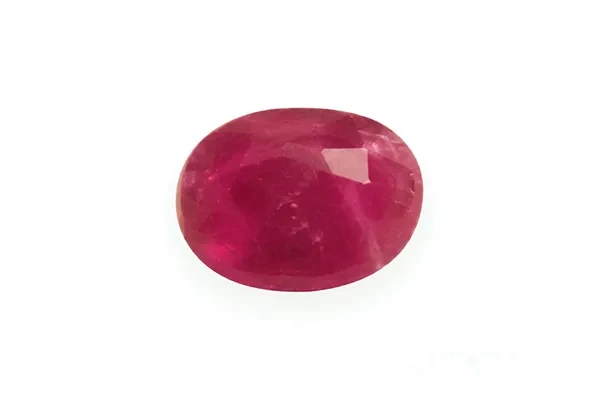
The finest rubies are a pure, vivid red, sometimes with a faint touch of purple. The old trade phrase "pigeon's blood" describes that intense red. Stones that lean orange, pink or brown, or are so dark they look black in dim light, are worth less. Look at saturation (how strong the colour is) and tone (how light or dark) separately: the best stones have strong colour without becoming inky.
Glow: the chromium effect
Ruby's red comes from chromium, which also makes many rubies fluoresce red under daylight and ultraviolet light. That inner glow is part of why fine stones look alive. Rubies from marble deposits, such as those from Burma and the Hunza valley in Pakistan, are known for it.
Clarity and silk
Almost every natural ruby has inclusions. Fine rutile needles, called silk, are common and can soften the colour attractively if they are light. Large cracks, dark crystals or cloudiness that kills the brilliance lower the value. For most buyers, aim for a stone that looks clean at arm's length.
Treatment: the biggest price question
- Heating is standard and accepted. It improves colour and clarity and is stable.
- Glass filling is very different: low-grade, heavily cracked corundum is filled with lead glass. These stones are much cheaper and less durable. Under a loupe they show flashes of blue or orange in the filled cracks and sometimes gas bubbles.
- Untreated rubies of good colour command a premium.
Garnet is the other common mix-up. It does not fluoresce like ruby and often looks darker and more brownish. Always get the material and treatment stated in writing.
Cut and durability
A good cut returns light evenly across the face of the stone, with no dull, see-through window in the middle. At 9 on the Mohs scale ruby is tough enough for everyday ring wear.
Price
Colour, treatment status and clarity decide most of the price; size multiplies it. We price every ruby individually.
Yaqoot in tradition
In South Asian astrology ruby is linked with the Sun (Surya) and is traditionally worn for confidence, vitality and leadership. These are beliefs, not promised outcomes; settle weight, metal and finger with your astrologer. Our rashi guide sets out common pairings.
Before you pay
Confirm the stone is natural, the treatment is disclosed in writing and the weight is the cut stone's. We inspect every ruby and photograph each one alone. Browse our rubies, or compare tourmaline and cat's eye. Our gem names page covers Urdu and English names, and Cash on Delivery reaches Lahore, Karachi and every other city.
References











