
In this article

GemStore team — written by the people who list and pack every stone.
Reviewed on
Traditional belief vs gemmology: anything on this page about luck, protection, planets, healing or religious tradition describes traditional and cultural beliefs — not proven effects, religious rulings or medical advice. A stone's identity, hardness, treatment and origin are gemmology, which a lab can test; the references at the end of the page cover that side.
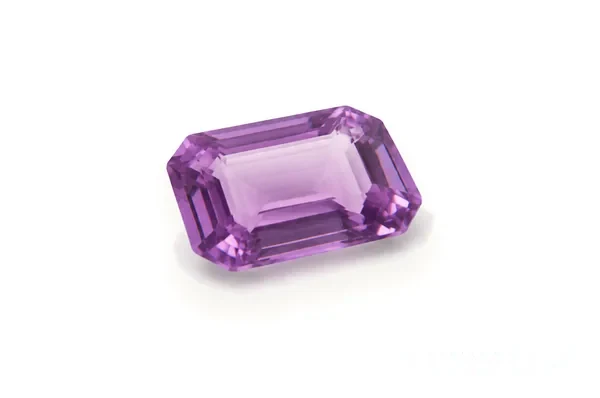
The February birthstone is amethyst, the purple form of quartz that Urdu speakers call Jamunia, after the dark jamun fruit. It is the birthstone that gives you the most visible stone for your money, but it also has one well-known weakness - strong sunlight - that every owner should know about before buying.
Start with the weakness: sunlight
Amethyst's purple can fade with long exposure to direct sun or heat. A deep stone worn on a hand through years of bright summers can slowly drift towards a greyish lilac, and the colour does not return. The fix is simple: do not leave it on a sunny windowsill or dressing table, take it off for long days outdoors, and keep it in a pouch. Steam cleaning and other heat are best avoided for the same reason.
What makes one amethyst better than another
- Depth of purple. The most prized material is a rich purple that throws red or rose flashes when tilted - traders still call this the "Siberian" look. Pale lilac is common and should cost a small fraction as much.
- Even colour. Amethyst grows in bands, so a careless cut can leave a colourless end. Turn the stone and look through it from the side; the purple should spread across the face.
- Clarity. Good amethyst is eye-clean. Visible inclusions here are simply a fault.
- Size. Quartz grows in large, clean crystals, so a big amethyst is not a rarity the way a big sapphire is. Weight still moves price, but less steeply than for scarcer gems.
Because two stones of the same weight can differ a great deal in colour, compare per-carat rates rather than sticker prices.
Heat treatment
A lot of commercial amethyst is heated to deepen or adjust its colour - and heating amethyst further is how much of the world's citrine is produced. Heat treatment is stable and accepted, but it should be disclosed. We disclose treatments when known; ask about any stone you are considering.
Synthetic and glass imitations
Lab-grown amethyst exists and is chemically the same as natural quartz, which is why a large, perfectly saturated and spotless stone at a very low price deserves a question. Purple glass is the cheaper fake: it may show gas bubbles under a loupe, feel less cool against the skin, and scratch more easily. A certificate is available on request and independent testing can be arranged.
Wearing amethyst
At 7 on the Mohs scale, amethyst is fine in a ring as long as you avoid hard knocks. Clean it with lukewarm soapy water and a soft brush, then dry it with a cloth.
Amethyst as a February gift
Purple suits silver beautifully, and amethyst lets you give a large, eye-catching stone without stretching the budget - a bold cocktail ring, a pendant or a pair of studs. Include a note about keeping it out of strong sun and the gift will look as good years later.
February in Vedic practice
The February pairing is Western. Astrologers in Pakistan more often follow the Vedic system, where stones follow the moon sign; some traditions use amethyst as a substitute linked to Saturn. Chart and month often disagree - see gemstones by rashi, and our birthstone guide for the history of the monthly list.
Choosing your amethyst with GemStore
Every stone in our amethyst collection is listed individually, photographed as it is and priced on its own. We deliver anywhere in Pakistan by insured courier with Cash on Delivery, you can inspect the stone before paying, and returns are accepted within 7 days of delivery. For help matching a size to a ring, message us on WhatsApp.
References











