
In this article

GemStore team — written by the people who list and pack every stone.
Reviewed on
Traditional belief vs gemmology: anything on this page about luck, protection, planets, healing or religious tradition describes traditional and cultural beliefs — not proven effects, religious rulings or medical advice. A stone's identity, hardness, treatment and origin are gemmology, which a lab can test; the references at the end of the page cover that side.
People born in March can choose between two stones. The modern pick is aquamarine, known in Urdu as Beruj, a clear sea-blue gem. The older traditional choice is bloodstone, a dark green opaque stone flecked with red. They are bought in completely different ways, so this guide takes each in turn.
Aquamarine in a nutshell
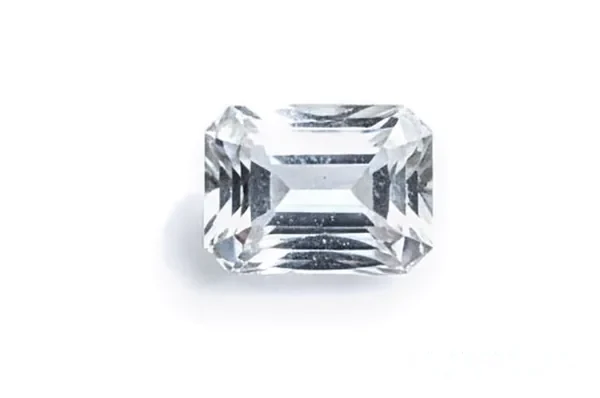
Aquamarine is beryl - the same mineral species as emerald - coloured blue by iron. Where emerald grows full of fractures, aquamarine forms large, clean crystals. That one difference explains the market: a clean aquamarine of several carats is routine, while a clean emerald of the same size is exceptional. If you want a sizeable, transparent blue stone, aquamarine gives you more of it than almost any other natural blue gem.
Reading aquamarine colour
Aquamarine runs from greenish sea-water tones to pure sky blue, and from almost colourless to a strong mid blue.
- Hue: buyers pay most for pure blue. A greenish stone is perfectly genuine but should be priced below a blue one.
- Saturation: this is the real dividing line. Most aquamarine is pale; a stone that still looks clearly blue in the shade belongs to a much higher bracket. Colour shows more strongly in bigger stones, which is one reason size and price rise together.
- Clarity: expect eye-clean. Unlike emerald, visible inclusions count against an aquamarine.
To compare, divide each price by carat weight.
Heating is normal - just ask
Most aquamarine is gently heated to remove green and leave a cleaner blue. The result is permanent and accepted, but it should be disclosed. A strong blue that has never been heated is worth more, and an honest seller should be happy to tell you which you are looking at.
Look-alikes to watch for
Blue topaz (often treated to a stronger blue), synthetic spinel and plain blue glass are all sold as aquamarine at times. Glass may show bubbles and rounded facet edges; blue topaz tends to look more intensely blue than most natural aquamarine at the same size. A certificate is available on request, and independent lab testing can be arranged.
Bloodstone: March's traditional stone
Bloodstone is a form of chalcedony - dark green with spots of red iron oxide. Being opaque, it is judged on pattern rather than clarity: a deep, even green with well-defined red spots is the goal, and prices vary much less than for aquamarine. It is a good choice for a signet-style men's ring or a carved piece. See the bloodstone category.
Caring for your aquamarine (beruj) and bloodstone
Aquamarine sits at 7.5 to 8 on the Mohs scale and takes regular ring wear well. Beryl can be brittle in certain directions, so avoid sharp knocks, and be careful with ultrasonic cleaners if the stone has inclusions reaching the surface. Warm soapy water and a soft brush are ideal for both March stones.
Gifting a March stone
Aquamarine's cool, calm colour makes it a favourite for engagement-style rings and simple pendants, and it suits both silver and gold. Bloodstone is the more unusual, understated choice, especially for men.
How the rashi system differs
The March pairing comes from the Western list. Pakistani astrologers usually choose by moon sign and planet under the Vedic system, which may point somewhere else entirely - see gemstones by rashi. For the history of the monthly list, read our birthstone guide.
Ordering from GemStore
Each stone in the aquamarine and bloodstone collections is photographed as it is and priced individually; the one in the photos is the one you receive. Delivery reaches every city in Pakistan, with Cash on Delivery, inspection before payment and 7-day returns. Questions? WhatsApp +92 308 887 3888.
References











