
In this article

GemStore team — written by the people who list and pack every stone.
Reviewed on
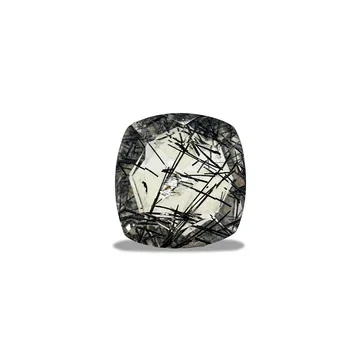
Moh-e-Najaf is rutilated quartz: clear or smoky quartz threaded with fine needles of rutile, usually golden, sometimes reddish or black. The fake you are most likely to meet in Pakistan is glass with fibres pressed into it, and the needles themselves give the game away within a few seconds. Here is how to read them before any money changes hands.
Start with the needles, not the colour
Natural rutile grows wherever the crystal let it. In a genuine stone the needles cross one another, fan out, bend slightly, change thickness and sit at different depths, so some look sharp and others look hazy when you tilt the stone. Inserted fibres in glass tend to run in neat parallel lines, all at the same depth, with the same thickness from end to end. If the pattern looks combed, be wary.
Three quick follow-up checks
- Bubbles: look past the needles into the clear body. Round gas bubbles point to glass; quartz may have tiny crystals or feathery fluid inclusions, but not perfect spheres.
- Temperature: quartz stays cool against the skin for a moment longer than glass, which warms almost at once in the palm.
- Edges: at 7 on the Mohs scale quartz keeps crisp facet edges and a firm polish. Glass is softer and shows rounded, scuffed edges sooner.
When a stone looks too good
A Moh-e-Najaf that is water-clear, packed with perfectly even golden needles and still cheap deserves a second look. Natural material rarely gives you all three at once. Ask the seller to write on the invoice that the stone is natural quartz and whether anything has been done to it. Someone selling glass will usually find a reason not to.
What sets the price of a genuine piece
Once you know the stone is real, the price follows how attractive the needles are: their colour, how densely and evenly they fill the stone, how clear the quartz is around them and how well the cut shows them off. Size matters less than those. We price each stone on its own.
Before you pay, confirm three things
- The stone is natural quartz, not glass or a synthetic.
- Any treatment has been disclosed in writing.
- The weight quoted is the weight of the finished, cut stone.
We inspect every stone against those points and photograph each one separately, so the picture on the listing is the stone that arrives. See the Moh-e-Najaf stones we have now, or compare purple sapphire and white topaz if you are weighing options. Our Urdu and English gem names list helps if a seller uses a name you do not recognise. Orders go out by Cash on Delivery to Lahore, Karachi and every other city, and you can open the parcel and check the stone before you pay.
References











