In this article

GemStore team — written by the people who list and pack every stone.
Reviewed on
Traditional belief vs gemmology: anything on this page about luck, protection, planets, healing or religious tradition describes traditional and cultural beliefs — not proven effects, religious rulings or medical advice. A stone's identity, hardness, treatment and origin are gemmology, which a lab can test; the references at the end of the page cover that side.
November babies can choose between two golden-hued stones: topaz, the traditional birthstone, and citrine, a yellow quartz sometimes called Sunehla, added to the modern list. Many people in Pakistan also ask for yellow topaz by the name Pukhraj, for reasons explained below. Topaz has a genuinely Pakistani side to its story, so we start there.
Katlang: Pakistan's pink topaz
The Katlang area near Mardan in Khyber Pakhtunkhwa is one of very few places on earth that produce naturally pink and sherry-pink topaz. Most pink topaz sold worldwide is yellow material that has been heated; Katlang stones can be pink straight from the ground, and the best are counted among the finest pink topaz known. Natural colour is worth considerably more than treated, so when buying topaz in Pakistan it pays to ask about origin.
The topaz colour ladder
- Imperial topaz - warm orange with pink undertones - and natural pink sit at the top.
- Sherry, golden and yellow topaz come next.
- Colourless and blue topaz are plentiful and inexpensive.
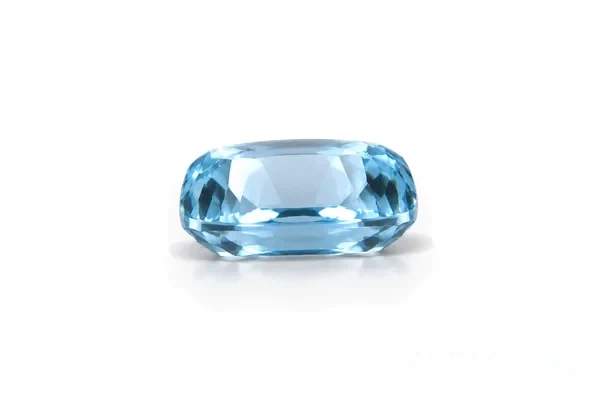
A word on blue: nearly all blue topaz is colourless topaz that has been irradiated and heated. It is stable, safe and perfectly legitimate, but it is not naturally blue and should be priced modestly. Natural blue topaz is rare and pale. Topaz usually forms clean, so visible inclusions are a genuine fault.
Citrine: mostly heated amethyst
Natural citrine is uncommon. Most citrine on the market is amethyst that has been heated until it turns yellow to orange. That treatment is permanent and accepted, but it should be disclosed, because it affects value. A useful clue: heated material often has a reddish or burnt-orange tinge, sometimes concentrated at one end, while natural citrine tends towards an even, softer lemon-to-golden yellow. If in doubt, ask.
Imitations and look-alikes
Yellow glass is sold as both topaz and citrine, and in the past "topaz" was used loosely for any yellow stone, including citrine itself - so check that a "topaz" really is topaz. Topaz feels noticeably heavy for its size and is harder than quartz. A certificate is available on request, and independent testing can be arranged for any significant stone.
Each listing on the topaz and citrine category pages shows the price of that individual stone.
Care: hardness is not toughness
Topaz is 8 on the Mohs scale, but it has perfect cleavage - a sharp knock at the wrong angle can split it cleanly. A protective or bezel setting is money well spent. Citrine is 7 on the Mohs scale and, like amethyst, can fade with long exposure to strong sun, so keep it out of direct sunlight when not worn. Both clean nicely in warm soapy water with a soft brush.
Gifting a November stone
A Katlang pink topaz makes a memorable gift with a Pakistani origin story. Citrine's sunny colour is cheerful and affordable, ideal for a first piece of gemstone jewellery or a statement pendant.
Pukhraj and the rashi system
The November pairings are Western. In Vedic practice, yellow topaz and citrine are both used as more affordable substitutes for yellow sapphire (Pukhraj), associated with Jupiter - which is why topaz is often asked for by that name here. Such substitutes are chosen by chart and budget rather than birth month; see gemstones by rashi and our birthstone guide.
Ordering from GemStore
Each topaz and citrine is photographed as it is, weighed and priced individually, with known treatments stated. Browse the topaz collection or citrine collection, pay Cash on Delivery after inspecting the stone, and return within 7 days if it is not right. Ask us on WhatsApp about Katlang material.
References