
In this article

GemStore team — written by the people who list and pack every stone.
Reviewed on
Traditional belief vs gemmology: anything on this page about luck, protection, planets, healing or religious tradition describes traditional and cultural beliefs — not proven effects, religious rulings or medical advice. A stone's identity, hardness, treatment and origin are gemmology, which a lab can test; the references at the end of the page cover that side.
October has two birthstones that could hardly be less alike. Opal, the traditional choice, is a soft, water-bearing form of silica that flashes rainbow colours; it has no widely used Urdu name and is traded here simply as opal. Tourmaline, added to the modern list, is a hard crystal found in more colours than any other gem. Here is how to choose either one - and how to keep an opal safe.
Part one: opal
Types of opal
- Black opal - dark body tone that makes the colour flashes dramatic; the most valuable type.
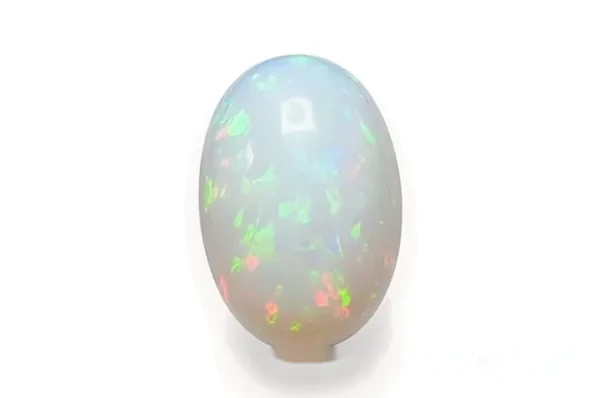
- White or crystal opal - light or transparent body, more common.
- Fire opal - transparent orange to red material, valued for its body colour and sometimes showing no play-of-colour at all.
What raises an opal's value
Opal is priced on play-of-colour, the shifting flashes you see as it turns. Three things matter: which colours appear (red is rarest, then orange and green; blue and violet are most common), how much of the face they cover, and the pattern - broad, bold patches usually beat a fine pinpoint speckle. Turn the stone fully around; dead, colourless zones are common and lower the value.
Doublets, triplets and fakes
A thin slice of opal glued to a dark backing (a doublet), sometimes with a clear cap on top (a triplet), can pass for solid black opal at a fraction of the cost. Look at the stone side-on: a perfectly straight, flat join line is the giveaway. Lab-made and plastic imitations exist too, often with an unnaturally regular, "snakeskin" pattern. Ask directly whether a stone is solid.
Opal care - the most fragile stone we sell
Opal is only 5.5 to 6.5 on the Mohs scale and contains water. It can craze, developing fine surface cracks, if it dries out or meets a sudden temperature change. Keep it away from heat, long spells of direct sun and years of very dry storage. Never use ultrasonic or steam cleaners - a soft damp cloth is enough. Where you can, choose a pendant or earrings over a daily ring, because opal chips more easily than most people expect.
Part two: tourmaline
Tourmaline's appeal is choice: pink, red, green, blue and the bi-coloured "watermelon" stones with a pink centre and green rim. Judge colour saturation and evenness first, then clarity, which should be good. Tourmaline is strongly pleochroic - its colour looks deeper from some directions than others - so a well-cut stone is oriented to show its best colour face-up. At 7 to 7.5 on the Mohs scale it is far better suited to everyday wear than opal. Coloured glass is the usual imitation; tourmaline's change in depth as you rotate it is a good sign you have the real thing.
Each listing on the opal and tourmaline category pages shows the price of that individual stone.
Which makes the better gift?
Opal is the romantic choice - no two look the same, which makes it feel personal - but it suits someone who will treat it gently. Tourmaline is the practical gift: hard-wearing, available in the recipient's favourite colour, and well suited to a ring.
October in the Vedic system
The October pairings are Western. In Vedic practice, opal is associated with Venus (Shukra) and is chosen by chart rather than by month. Our page on gemstones by rashi sets out both approaches, and the birthstone guide covers the history of the list.
Ordering opal or tourmaline
Each opal and tourmaline we list is photographed as it is and priced on its own; the stone in the photos is the one we send. Browse the opal collection or tourmaline collection and order with Cash on Delivery, open the parcel to check the stone before paying, and return within 7 days if needed. For setting advice, WhatsApp us.
References











