In this article

Written by Sohail Hashmi
Reviewed on
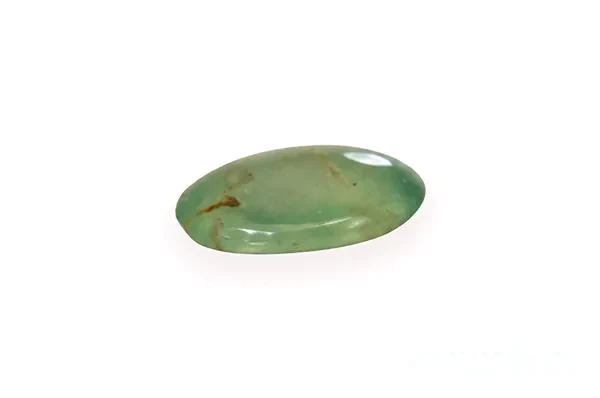
A green stone sold as zamurd is not always emerald. Green tourmaline is one of the most common look-alikes, and the two can be hard to separate by eye, especially in smaller sizes. Whether you are buying in Karachi, Islamabad or online, here is what sets them apart, which checks you can do yourself, and when to ask for a lab report.
What is the difference between emerald and green tourmaline?
They are different minerals. Emerald is green beryl, coloured mainly by chromium or vanadium. Green tourmaline is a variety of tourmaline, a separate mineral family with a different crystal structure. That difference shows up in how light passes through each stone, how included they usually are, and how much colour changes with the viewing angle.
| Emerald (zamurd) | Green tourmaline | |
|---|---|---|
| Mineral | Beryl | Tourmaline |
| Hardness (Mohs) | 7.5 to 8 | 7 to 7.5 |
| Typical colour | Pure green to bluish green | Often olive, yellowish or dark bottle green; some are bright green |
| Colour change with angle | Slight | Strong: much darker looking down the length of the crystal |
| Usual clarity | Almost always included (jardin) | Often cleaner |
| Facet doubling under a loupe | Rarely visible | Often visible in larger stones |
| Common treatment | Oil or resin in fractures | Sometimes heated; usually untreated |
Can I tell them apart by colour?
Partly. Emerald's best colour is a pure, slightly bluish green. Many green tourmalines lean olive or yellowish, or look much darker from one direction. Turn the stone: if it looks noticeably darker or more yellow from one side than from the top, tourmaline is likely. Some chrome tourmaline has a bright emerald-like green, though, so colour alone never settles it.
What does a 10x loupe show?
Two things are worth looking for. First, inclusions: natural emerald nearly always carries a visible "garden" of fine fractures and wisps, while tourmaline is often much cleaner. Second, facet doubling: tourmaline splits light strongly, so in a larger stone you may see the back facet edges doubled when you look through the table. Emerald splits light only weakly, so doubling is rarely visible.
Is a very clean emerald a warning sign?
It can be. Eye-clean natural emerald exists but is rare, so a large, bright, flawless green stone offered as emerald at an ordinary price should be tested. It may be tourmaline, synthetic emerald or glass. Our real vs fake gemstones guide covers other quick checks.
Which is better for a ring worn every day?
Tourmaline is often the more practical stone. Both are reasonably hard, but emerald's natural fractures make it more likely to chip if knocked, and the oil in those fractures can be affected by heat and ultrasonic cleaners. Emerald rings are best set with protective settings and cleaned with lukewarm soapy water only. Tourmaline tolerates everyday wear better, though it still deserves care.
Is tourmaline a fake emerald?
No. Tourmaline is a natural gemstone in its own right with its own value. The problem is only when it is sold under the name emerald. A seller should name the mineral clearly and state any treatment, and there is nothing wrong with choosing tourmaline for its colour and durability.
How do I make sure what I am buying?
Ask for the mineral name and treatment in writing, and for any significant purchase ask for an independent lab report, which identifies emerald and tourmaline quickly. Our guide on how to read a gemstone lab certificate explains what the report should say. You can compare stones on our emerald and tourmaline pages, and if you are choosing between emerald sources, read Swat vs Zambian vs Colombian emerald.
References