In this article

GemStore team — written by the people who list and pack every stone.
Reviewed on
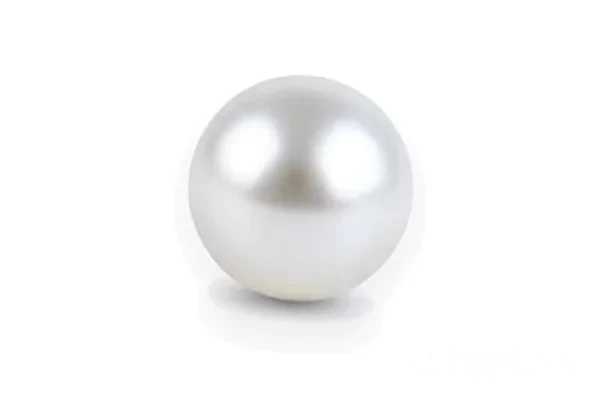
Pearls (moti) are priced in a different way from mined gems. There is no cut to judge and no clarity grade in the usual sense; instead the value sits in the pearl's nacre, its lustre, its shape and where it grew. Two pearls of the same weight can be far apart in price once you know what you are looking at. This article explains what is behind those differences.
Natural, cultured or imitation
This is the first and biggest price split. A natural pearl formed without human help and is now rare; the old Gulf pearls once traded as "Basra moti" were natural. Almost all pearls sold today are cultured, meaning a farmer started the process. Imitations are glass or plastic beads with a pearly coating. The quick home check is the tooth test: rub the pearl gently against the edge of your front teeth. Real pearls, natural or cultured, feel slightly gritty; imitations feel smooth.
Saltwater or freshwater
Freshwater pearls come mainly from mussel farms, are produced in large numbers and are usually the most affordable. Saltwater pearls such as Akoya, South Sea and Tahitian come from oysters, take longer to grow and generally cost more for the same size.
The five things a pearl buyer looks at
- Lustre: how sharp and bright the reflections are on the surface. High lustre is the single strongest value factor.
- Nacre: the layered material that builds the pearl. Thick nacre gives deeper glow and better durability; thin nacre over a bead can wear through.
- Surface: fewer spots, pits and bumps means a higher price.
- Shape: perfectly round pearls are the rarest. Near-round, drop and button shapes cost less, and baroque shapes less again, though they have their own appeal.
- Size and colour: larger pearls rise in price quickly, and an attractive overtone, such as a rose or silver tint, adds value.
Caring for what you buy
At 2.5 to 4.5 on the Mohs scale pearl is soft. It suits pendants and earrings better than an everyday ring, and should never go in an ultrasonic cleaner. Perfume, sweat and acids dull nacre, so put pearls on last and wipe them after wearing.
Moti in tradition
In South Asian astrology pearl is linked with the Moon (Chandra) and is traditionally worn for calm, patience and emotional balance. These are beliefs rather than promised results; agree weight, metal and finger with your astrologer first. Our rashi guide sets out common pairings.
Before you pay
Make sure the pearl is genuine rather than glass or plastic, that any treatment such as dyeing or bleaching is disclosed in writing, and that the weight quoted is correct. We inspect every pearl and photograph each one alone. Browse our pearls, or compare sulemani agate and aqeeq. Urdu and English names are on our names page, and Cash on Delivery reaches Lahore, Karachi and the rest of Pakistan.
References