
In this article

GemStore team — written by the people who list and pack every stone.
Reviewed on
Traditional belief vs gemmology: anything on this page about luck, protection, planets, healing or religious tradition describes traditional and cultural beliefs — not proven effects, religious rulings or medical advice. A stone's identity, hardness, treatment and origin are gemmology, which a lab can test; the references at the end of the page cover that side.
December has the longest list of any month. The modern choice is tanzanite, added in 2002; the traditional lists give turquoise, known across Pakistan as Feroza, and lapis lazuli, or Lajward. All three are blue, but one is a transparent crystal and the other two are opaque stones judged in a completely different way. Use the comparison below to choose, then read the section for your stone.
At a glance
| Tanzanite | Feroza (turquoise) | Lajward (lapis) | |
|---|---|---|---|
| Look | Transparent violet-blue | Opaque sky blue to green-blue | Opaque deep royal blue |
| Mohs hardness | 6 to 7 | 5 to 6 | 5 to 6 |
| Judged on | Colour depth | Colour and matrix | Even blue, pyrite, little calcite |
| Main risk | Cleavage, heat shock | Dyed fakes, porosity | Dyed material |
Tanzanite: a single source
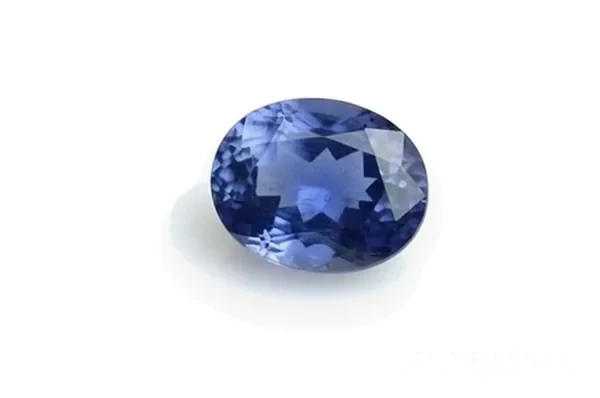
Tanzanite is found in only one place on earth - a narrow strip of land at Merelani in northern Tanzania - and was discovered in 1967. That single source means supply really is limited, which is a large part of the stone's appeal.
Colour decides value. The finest tanzanite is a deep violet-blue with purple flashes; pale, greyish or very light stones are much more common and much cheaper. It is strongly trichroic, showing blue, violet and burgundy from different directions, so a skilled cutter orients it to show blue face-up - rotate it as you look.
Heat is standard. Almost all tanzanite is heated to remove a brownish tint; this is permanent and accepted. Unheated material is rare. Imitations include synthetic forsterite, glass and colour-changed synthetics, so ask for a certificate on request for any significant stone.
Treat it gently. With a distinct cleavage and modest hardness, tanzanite suits a pendant, earrings or an occasional ring. Never put it in an ultrasonic cleaner and avoid sudden temperature changes.
Feroza: deep regional roots, many fakes
Turquoise has perhaps the longest history of any stone in this region. Persian turquoise from Nishapur has been traded through Peshawar and Quetta for centuries, and its clear sky blue is still the benchmark.
It is also the most imitated. Dyed howlite and magnesite are widely sold as Feroza. Genuine turquoise is porous, so much of it is stabilised with resin to harden it - acceptable when disclosed. Dyeing to fake the colour is not. What to check:
- Natural turquoise often shows some matrix - darker veins of host rock - which should look irregular, not printed.
- Colour should sit through the stone, not pool along cracks and veins.
- Ask plainly: natural, stabilised or dyed?
Feroza is soft and porous: keep it away from perfume, oils, cosmetics and water, and slip a turquoise ring off before washing your hands or doing wudu.
Lajward: Afghanistan's blue
The Sar-e-Sang mines in Badakhshan, Afghanistan, have supplied the world's finest lapis for thousands of years, and the stone reaches Pakistan across that border. Look for an even, intense royal blue, fine golden flecks of pyrite scattered through it rather than in big patches, and as little grey-white calcite as possible. Dyed lapis exists: rubbing a hidden spot with a cotton bud and a little acetone will show colour transfer on dyed material. Care for it as you would turquoise.
Choosing a December gift
Tanzanite makes a striking, modern gift for a special occasion. Feroza carries strong cultural meaning in Pakistan and is a popular ring stone, especially for men. Lapis offers a rich, regal blue at a gentle budget and suits pendants, beads and signet-style rings.
December and Vedic practice
These December stones come from Western lists. In Vedic tradition, lapis and other blue stones are associated with Saturn and chosen by chart rather than by birth month. See gemstones by rashi and our birthstone guide.
Ordering from GemStore
Every stone is photographed as it is and priced individually, with known treatments disclosed. Browse tanzanite, Feroza or lapis lazuli; pay Cash on Delivery after checking the stone, with 7-day returns. Questions? WhatsApp +92 308 887 3888.
References











