In this article

GemStore team — written by the people who list and pack every stone.
Reviewed on
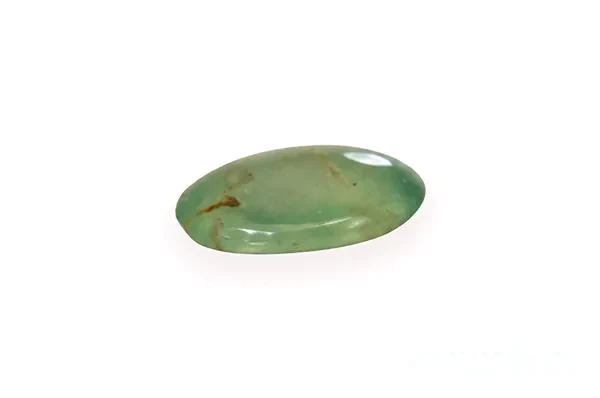
Emerald (zamurd) is green beryl coloured by chromium or vanadium, and it is the gem where buyers most often confuse "flawless" with "genuine". Almost the opposite is true. A natural emerald nearly always carries inclusions, and learning to read them is the best protection you have against glass, synthetics and assembled stones.
The jardin: emerald's garden
Gem dealers call emerald's inclusions its jardin, French for garden, because under magnification they look like moss, roots and leaves. You may see tiny feathers, crystals, wispy veils or three-phase inclusions (a pocket holding liquid, a gas bubble and a tiny crystal). These are signs of natural growth. A completely clean, intensely green emerald at a low price is the stone to be suspicious of.
Oiling: the treatment almost every emerald has
Because emeralds contain surface-reaching fissures, most are treated with colourless oil or resin to fill them and improve clarity. This has been standard practice for centuries and is accepted in the trade. It should be disclosed, and the degree matters: minor oiling is normal, heavy filling, especially with coloured oil or hardened resin, lowers value. We disclose oiling where it is known.
The fakes, and how each one fails
Green glass
Round gas bubbles, swirl marks and a too-even colour. It also tends to look glassy and lively in a way emerald does not.
Synthetic emerald
Lab-grown emerald is real beryl with the same hardness and much the same look. It often shows wispy "veils" or chevron growth patterns rather than a natural jardin, but separating it reliably needs a lab.
Doublets and triplets
A colourless top glued to a green base or a green layer. Look at the stone from the side: a flat line or change of colour around the girdle is the giveaway.
Other green stones
Green tourmaline, peridot and dyed quartz are sometimes passed off as zamurd. Their tone and inclusions differ, and a refractometer test separates them quickly.
Origin and the Pakistani market
Pakistan's Swat valley has long been a known emerald source, alongside Afghanistan's Panjshir, Colombia and Zambia. Origin can influence price, but it can only be stated reliably by a laboratory, so treat any verbal origin claim with care.
Hardness and care
Emerald is 7.5 to 8 on the Mohs scale, but its inclusions make it more brittle than that number suggests. Choose a protective setting, avoid ultrasonic and steam cleaners (which can drive out oil) and clean with lukewarm soapy water only.
Zamurd and Budh
In South Asian practice zamurd is linked to Mercury (Budh) and worn for intellect, memory and clear communication. These are traditional beliefs, not promised outcomes; see our rashi guide for pairings.
Buying zamurd from GemStore
Every stone in our emerald collection is inspected, photographed individually and listed with known treatments. A certificate of authenticity is available on request, and independent lab testing can be arranged. Also see jasper and purple sapphire. Urdu names are on our names page, with Cash on Delivery to Lahore, Karachi and every other city.
References