In this article

GemStore team — written by the people who list and pack every stone.
Reviewed on
Traditional belief vs gemmology: anything on this page about luck, protection, planets, healing or religious tradition describes traditional and cultural beliefs — not proven effects, religious rulings or medical advice. A stone's identity, hardness, treatment and origin are gemmology, which a lab can test; the references at the end of the page cover that side.
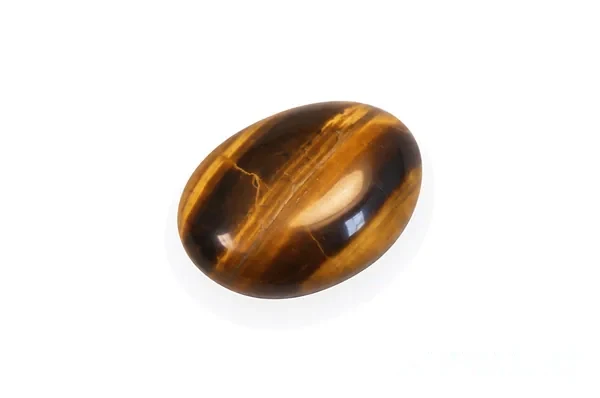
Tiger eye is easy to recognise: a golden-brown stone with a silky band of light that rolls across it as you move. Many people in Pakistan buy it for confidence and focus as much as for its looks. This guide covers what the tradition says, what that moving band actually is, and the practical choices that make a tiger eye ring or pendant worth wearing.
Where the shine comes from
Tiger eye is quartz that has replaced fine fibres of another mineral while keeping their shape. Those parallel fibres reflect light in a single bright line, an effect called chatoyancy, the same "cat's eye" effect seen in some other gems. The cutter must shape the stone as a cabochon with the fibres running flat across it, or the band will be weak and off-centre. Blue-grey material from the same deposits is sold as hawk's eye, and red tiger eye is usually golden tiger eye that has been heated.
What it is traditionally worn for
In popular gem tradition tiger eye is linked with the Sun and is worn for focus and self-confidence; many also see it as a protective stone. These are beliefs, not guaranteed outcomes, and we do not promise results. If you are following an astrologer, agree weight, metal and finger with them before a ring is made. Our rashi guide sets out the common pairings.
Choosing a good stone
- The band: a sharp, bright line that glides smoothly across the full width of the stone when tilted.
- Colour: rich golden to honey-brown, with clear contrast between bands.
- Shape: a well-domed, symmetrical cabochon with a smooth, glassy polish.
Real tiger eye or dyed quartzite?
Dyed quartzite and some glass imitations copy the colour but not the light. Natural tiger eye shows a silky band that moves as you tilt it; imitations look flat or show a fixed, painted-looking stripe. A perfectly uniform, flawless and very cheap stone is a reason to look closer. Ask the seller to write that it is natural tiger eye and whether it has been heated or dyed.
Durability and setting
At 7 on the Mohs scale tiger eye handles everyday ring wear well. A hard knock on an exposed edge can still chip it, so a bezel setting is a good idea for a ring worn daily. Silver settings are a popular choice.
Price
The sharpness of the band, colour and polish matter more than size. We price each stone individually.
Before you pay
Confirm it is natural, that any treatment is written down and that the weight is the cut stone's. We inspect every stone and photograph each one alone. Browse tiger eye, or compare amber and feroza. Urdu and English names are on our gem names page, and Cash on Delivery reaches Lahore, Karachi and every other city.
References