
In this article

GemStore team — written by the people who list and pack every stone.
Reviewed on
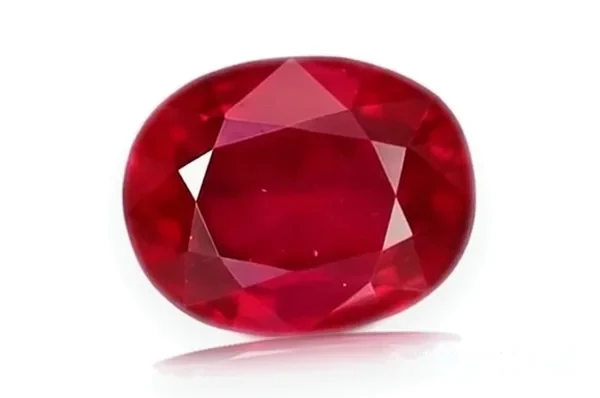
Short answer: a ruby is red corundum, coloured by chromium, and its value depends above all on colour – a vivid, pure to slightly purplish red of medium-dark tone is the target. After colour come clarity, cut, size and treatment. Heating is normal and acceptable when disclosed; lead-glass filling is not the same product and should never be sold at ruby prices. If you buy with those points in mind, you will rarely go wrong.
In Pakistan the stone goes by several names: yaqoot in Urdu and manik (from the Sanskrit manikya) in the astrological tradition. Below we cover what a ruby actually is, how a buyer should judge one, where the world's rubies come from, which treatments to ask about, how to separate a genuine stone from garnet, spinel and glass, and how ruby is worn in Vedic tradition.
Ruby at a glance
| Property | Ruby |
|---|---|
| Mineral | Corundum (aluminium oxide) |
| Cause of colour | Traces of chromium |
| Mohs hardness | 9 (only diamond is harder) |
| Specific gravity | About 4.0 – noticeably heavy for its size |
| Cleavage | None, which makes it very durable |
| Fluorescence | Often red under UV light, strongest in low-iron stones |
| Common treatment | Heating; sometimes flux healing |
| Urdu / trade names | Yaqoot, manik |
One mineral, many names: corundum in any colour other than red is called sapphire. Blue corundum is neelam, yellow corundum is pukhraj, and pale or pinkish-red stones sit on a trade boundary between pink sapphire and ruby. The chromium that makes ruby red also makes many rubies glow under ultraviolet light, which is part of why a fine stone looks lit from inside in daylight.
How to judge a ruby, in order of importance
1. Colour decides most of the price
Gemmologists split colour into three parts, and you can use the same language when you compare stones:
- Hue – the red itself. Pure red and slightly purplish red are the most prized. Orange-red and brownish-red are worth less.
- Tone – lightness or darkness. Medium to medium-dark is ideal. Very dark stones look like garnet indoors; very light ones look pink.
- Saturation – intensity. A vivid red with no grey or brown masking is what separates a fine stone from a commercial one of the same size.
You will hear the phrase pigeon blood. It describes a vivid, pure red with strong fluorescence, historically linked to the best Burmese rubies. Some laboratories now use it as a colour grade, but in everyday selling it is badly overused, so treat it as a description to be checked, not a promise.
2. Clarity: expect some inclusions
Ruby almost always contains something. Fine rutile needles (called silk), tiny crystals, healed fractures that look like fingerprints, and straight colour bands are all natural. A little silk can even spread the colour softly across the face of the stone. What reduces value is anything that blocks light or weakens the stone: open fractures reaching the surface, heavy clouds or large dark crystals. Eye-clean rubies over about two carats are genuinely scarce.
3. Cut
Many rubies are cut in the source country to save weight rather than to maximise brightness. Look for even colour and sparkle across the face, without a pale see-through patch in the middle (a window) or large dark areas (extinction). A smaller stone with a good cut often looks better than a heavier, lumpy one.
4. Carat weight
Ruby is priced per carat, and the rate per carat climbs with size because large, clean, well-coloured crystals are rare. Two one-carat stones will normally cost much less than a single two-carat stone of the same quality.
Where rubies come from
Origin influences price, but it is only meaningful when a gemmological laboratory states it on a report. A seller's verbal claim is not evidence.
| Source | Typical look | How the market sees it |
|---|---|---|
| Myanmar (Mogok; Mong Hsu) | Vivid red, strong fluorescence, fine silk | The historic benchmark; fine unheated Mogok stones are collector items |
| Mozambique | Bright red to purplish red, often fairly clean | Today's major source; very good value for colour |
| Madagascar | Good red, frequently heated | Wide commercial-to-fine range |
| Afghanistan (Jegdalek) | Purplish red, marble-hosted, glowing | Well liked in the region; fine pieces are rare |
| Pakistan (Hunza Valley; Azad Kashmir) | Pinkish to purplish red in white marble | Mostly cabochon and specimen grade; faceting quality is uncommon |
| Sri Lanka | Lighter, pinkish red, lively | Popular for jewellery |
| Thailand / Cambodia | Darker, slightly brownish, weaker fluorescence | Commercial |
The practical lesson: a fine stone from Mozambique will look better than an average one from Myanmar. Buy the ruby you can see, not the place name attached to it.
Treatments: the questions to ask
- Heating. Improves colour and clears silk. It is permanent, standard in the trade and acceptable when disclosed. A ruby with a report stating no indication of heating sells at a clear premium.
- Heating with flux (flux healing). During heating, a flux can melt into fine fractures and heal them with a glassy residue. Acceptable when disclosed and minor; a report will usually mention residues.
- Lead-glass filling. Heavily fractured, low-grade corundum is filled with high-lead glass so it looks like a transparent red stone. These composites are fragile, can be damaged by jewellers' heat, lemon juice and household chemicals, and are worth a small fraction of a true ruby. Under a loupe look for flattened gas bubbles inside fractures and a blue or orange flash along them. They are not suitable for astrological wear.
- Synthetic ruby. Laboratory-grown ruby has existed since the early 1900s, when the Verneuil flame-fusion process was introduced. Flame-fusion stones show curved growth lines and gas bubbles; flux-grown and hydrothermal synthetics can be very convincing and may need a laboratory to identify.
At GemStore, treatment that is normal for ruby is disclosed on the listing when it is known. If you want certainty about heating, a laboratory report can be arranged on request.
Is it a ruby? A buyer's checklist
- Look in daylight. Natural ruby usually shows slightly uneven colour and a glow near a window. Glass looks flat.
- Use a 10x loupe. Straight silk, angular colour bands and tiny crystals point to a natural stone. Round bubbles and curved lines point to glass or a flame-fusion synthetic.
- Check fractures. Coloured flashes and trapped bubbles in cracks suggest lead-glass filling.
- Feel the weight. Corundum is dense; glass of the same size feels lighter and warms on the skin more quickly.
- Try a UV torch. Many natural rubies glow red. This is a clue, not proof, because some synthetics glow strongly too.
- Think about the price. A large, vivid, clean ruby offered cheaply is almost always filled, synthetic or a different stone.
Common lookalikes
In local markets, garnet and red spinel are sometimes sold as yaqoot. Both are attractive gemstones in their own right, but they should be sold under their own names. Garnet is softer (about 7–7.5) and does not show ruby's red-and-pinkish pleochroism; spinel shows no pleochroism at all. Separating them with confidence needs refractive index readings or a laboratory. More home checks are in our guide to real and fake gemstones, and our inspection process is explained on the authenticity page.
What drives the price of a ruby
Ruby varies in price more widely than almost any other gem: a dark, included commercial stone and a vivid, clean, unheated stone of the same weight can be worlds apart. In rough order of impact, price rises with:
- a purer, more saturated red;
- better clarity, especially eye-clean stones;
- larger size (the per-carat rate rises with weight);
- no heating, confirmed by a laboratory report;
- a well-documented origin;
- a good cut that shows colour evenly.
Every listing in our ruby collection is a single stone with its own price, so you can work out the per-carat rate yourself by dividing the price by the carat weight.
Ruby in Vedic tradition
In Vedic astrology manik is associated with Surya, the Sun, which is linked with authority, vitality, self-confidence and the father. It is traditionally suggested for people born under Simha (Leo), whose ruling planet is the Sun, and astrologers sometimes recommend it for Mesh (Aries), Dhanu (Sagittarius) and Vrishchik (Scorpio) after reading the full chart. These are beliefs, not guaranteed effects.
| Custom | Traditional practice |
|---|---|
| Finger | Ring finger of the working hand |
| Metal | Gold or copper; panchdhatu is also used |
| Day | Sunday morning, around sunrise |
| Weight | Often 3 carats or more, as advised by the astrologer |
| Setting | Open back, so the stone touches the skin |
| Mantra | "Om Suryaya Namah" |
Tradition asks for a natural stone, so glass-filled and synthetic rubies are excluded. Our 7-day return policy gives you time to confirm the choice with your astrologer; keep the stone unused and unset until you are sure, because returns must be in original condition. For other signs, see gemstones by rashi.
Looking after a ruby
A natural or heated ruby is one of the toughest gems you can wear. Warm water, a drop of mild soap and a soft brush are enough. A glass-filled stone is different: hot water, acids such as lemon juice and the heat of a jeweller's torch can all damage the filler, which is one more reason to know exactly what you own. Full advice is in our gemstone care guide.
Buying ruby from GemStore
We sell natural loose rubies only. Each listing is one individual stone, photographed as it is, with known treatments disclosed. A certificate of authenticity is available on request, and independent laboratory testing can be arranged. If you love red but want to spend less, compare with our garnet collection. Orders go to every city in Pakistan, including Lahore, Karachi and Islamabad, by insured, tracked courier with Cash on Delivery, and you may open the parcel and inspect the stone before paying. If you have a question about a particular stone or would like to discuss a silver ring setting, message us on WhatsApp.
References











